
Additionally, the GIIN published “Impact Investing Through the Balance Sheet: A Guide for CFOs and Treasury Professionals,” which explores how corporate treasury functions can contribute meaningfully to organizational goals through impact investing. This report offers a practical framework for companies starting a corporate impact investing strategy that delivers both financial and impact returns.
These publications helped establish a solid knowledge base and provide a clear view of the choices companies make when developing and executing their impact investments to deliver value for both sustainability and business goals. The knowledge gathered by the GIIN clarified the mechanics of how corporates engage in impact investing, though it did not yet quantify the scale of their activities.
To fill that gap, the GIIN incorporated new, tailored questions for corporates into its annual impact investor survey, grounding the discussion in data for the first time.
Recent trends in Corporate Impact Investing

The GIIN's 2025 Annual Impact Investor Survey covered corporate impact investing for the first time, allowing practitioners to access up-to-date insights on the growing trends and performance of corporate impact investments. Read our full blog post analyzing the survey's findings and discover snapshots of the stats uncovered below!
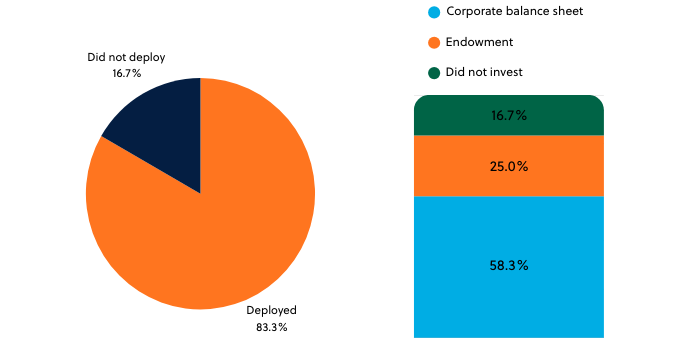
83% of respondents deployed capital in 2024, with half deploying capital from the corporate balance sheet. On average, respondents deployed $15.2 million of impact capital in 2024. The maximum value was $100 million and the minimum value was $2.1 million. The total AUM deployed in 2024 was $182.4 million.
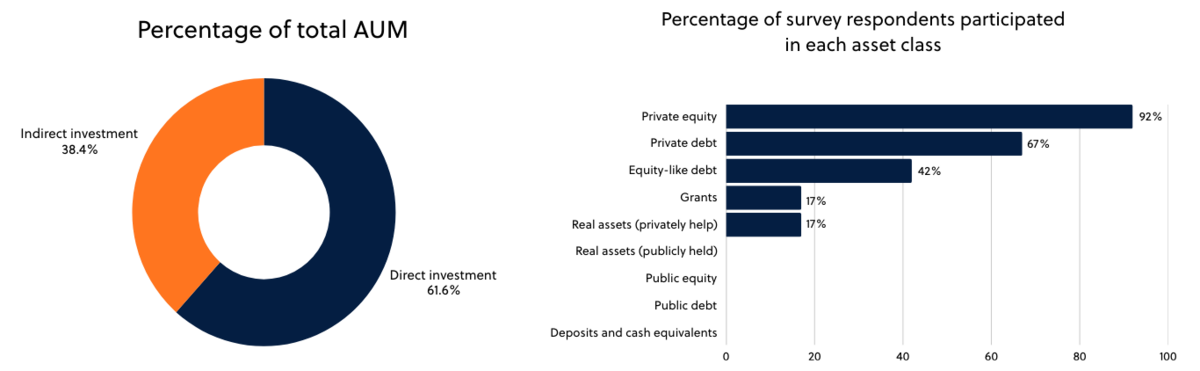
When it comes to how assets are allocated, corporations leaned heavily on direct investments, which accounted for 62% of their impact AUM on average. The rest was placed through indirect vehicles (38%), though most investors in the sample used a mixed approach. By asset class, private equity dominated portfolios, followed by private debt, with several respondents allocating a portion to equity-like debt instruments.

Healthcare and agriculture emerged as areas where half of corporate respondents allocated capital. Those that invest in healthcare allocated, on average, more than 70% of their impact AUM to this sector – reasonable because 33% of respondents operate within the healthcare sector. 42% of respondents also invested in transportation and 33% in financial services (including microfinance).
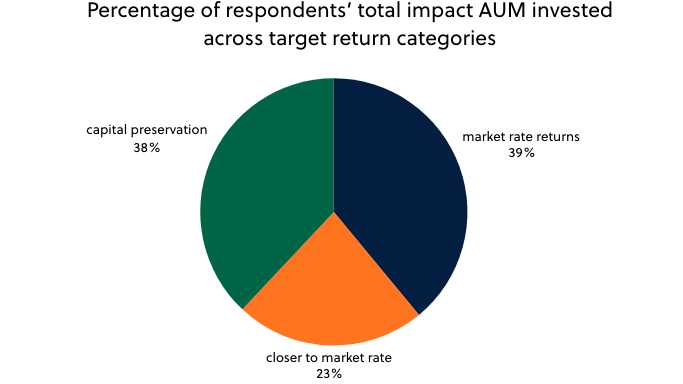
Corporate entity and corporate foundation respondents in this sample allocated their total impact AUM almost equally between market-rate return strategies and capital preservation, each representing 38-39%. This balance reflects the dual imperative corporations face: to steward shareholder value while demonstrating authentic social and environmental contributions. 22% is allocated to in-between opportunities that fit a close-to-market rate profile.
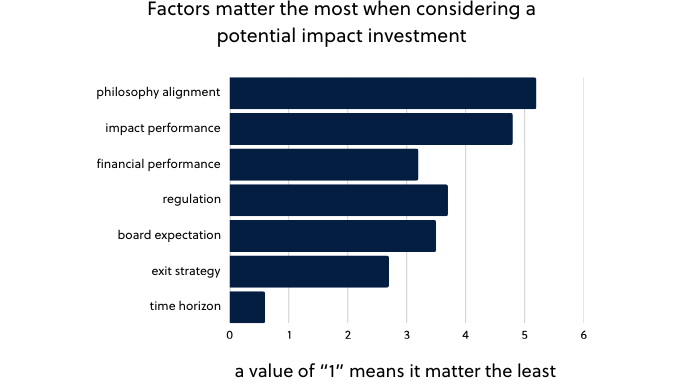
When asked about what matters most in evaluating an investment, corporations prioritized philosophy alignment and impact performance.
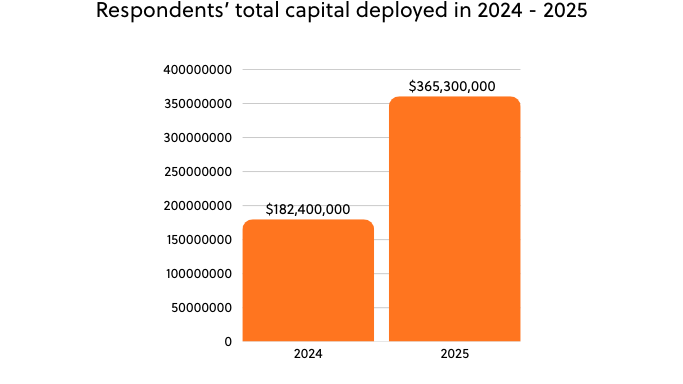
Corporate investors plan to deploy nearly double the capital in 2025 compared with 2024, rising from $182.4 million last year to over $365.3 million this year.
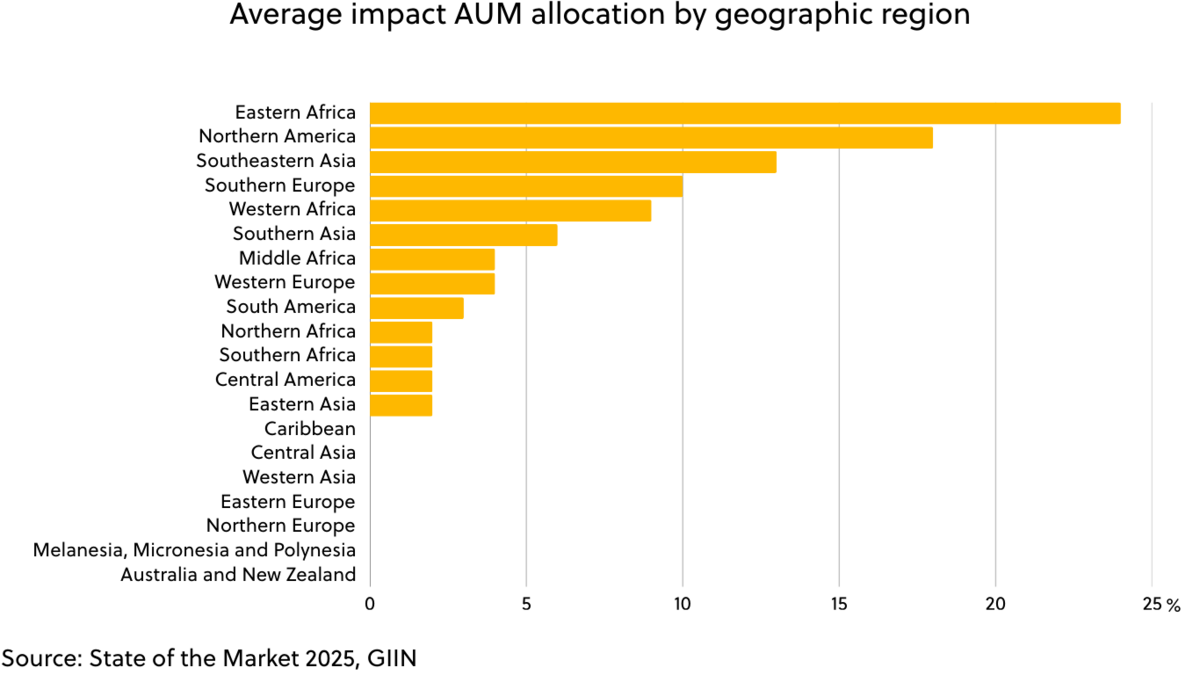
Corporations plan to expand allocations most significantly in West Africa, South Africa and South America over the next five years.
Read “Impact investing is big business: a look at recent trends in corporate impact investing” for the analysis of corporate responses and see “State of the Market 2025” for the full results.
To learn how to join the Corporate Impact Investing Initiative:
Explore the GIIN membership program
Connect and learn about GIIN membership
The GIIN extends its gratitude to the organizations whose generous support made the work of the Corporate Impact Investing Initiative possible: Deloitte, PayPal, TELUS Pollinator Fund for Good, Visa Foundation and the Walton Family Foundation.