What is blended finance?

Blended finance is a strategy that combines capital with different levels of risk in order to catalyze risk-adjusted, market-rate-seeking financing into impact investments. The providers of the risk-tolerant, “catalytic” capital in blended finance structures aim to increase their social and/or environmental impact by accessing larger, more diverse pools of capital from commercial investors. With mounting urgency to solve systemic problems facing people and the planet, blended finance and catalytic capital are increasingly effective and essential tools for impact investors.
The importance and challenges facing blended finance
The opportunity for innovative blended finance structures to expand the reach and scale of impact investing is encouraging. Particular objectives such as increasing access to healthcare and affordable housing, or supporting community development, can be supported more effectively by these approaches. The GIIN is committed to continue to work with the investor community to build guidance and thought leadership around these tools.
-
Why is blended finance important?
While the impact investing industry has grown remarkably over the past few years, accounting for more than $228 billion USD invested, the challenges impact investors seek to address remain daunting. Mobilizing additional capital is a crucial need for the industry.
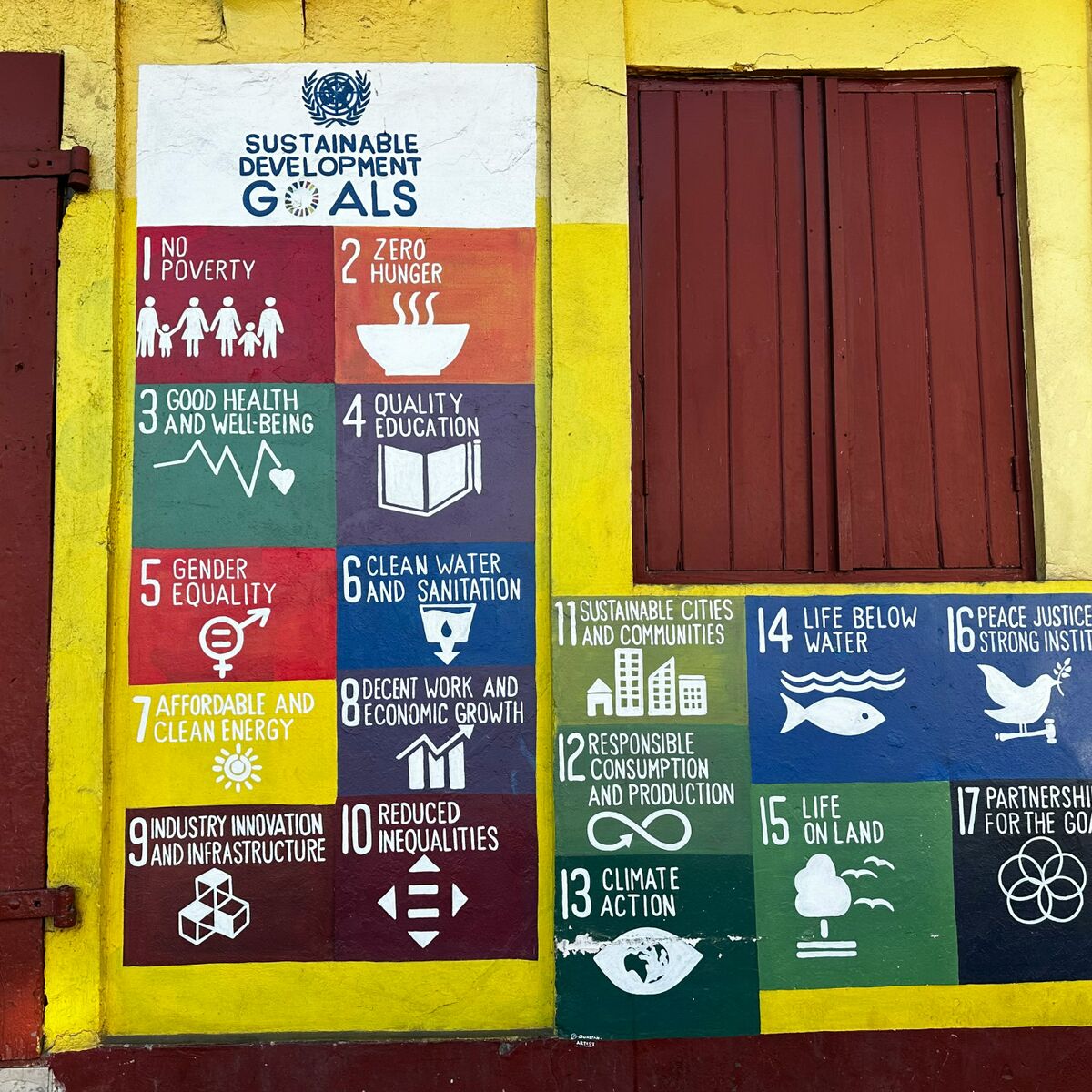
This is especially true in terms of achieving the United Nations’ Sustainable Development Goals (SDGs). It is estimated that the SDGs face an annual funding gap between $5 to $7 trillion USD. Capital deployed through blended finance structures can help address this gap by enabling the entry of more conventional capital flows into products, companies and funds which incorporate impact objectives.
-

What challenges are facing blended finance adopters?
Despite its potential, blended finance remains underleveraged. Key challenges include difficulty in structuring blended finance vehicles due to their complex and bespoke nature; issues with aligning expectations among various stakeholders; and lack of available risk capital.
On top of this, the challenge of shifting mindsets remains. The misconception that impact first investing and patient capital can be used in limited investment areas, such as official development assistance, or by development agencies, continues to be a barrier for expansion of private investment in these initiatives.
Blended finance characteristics
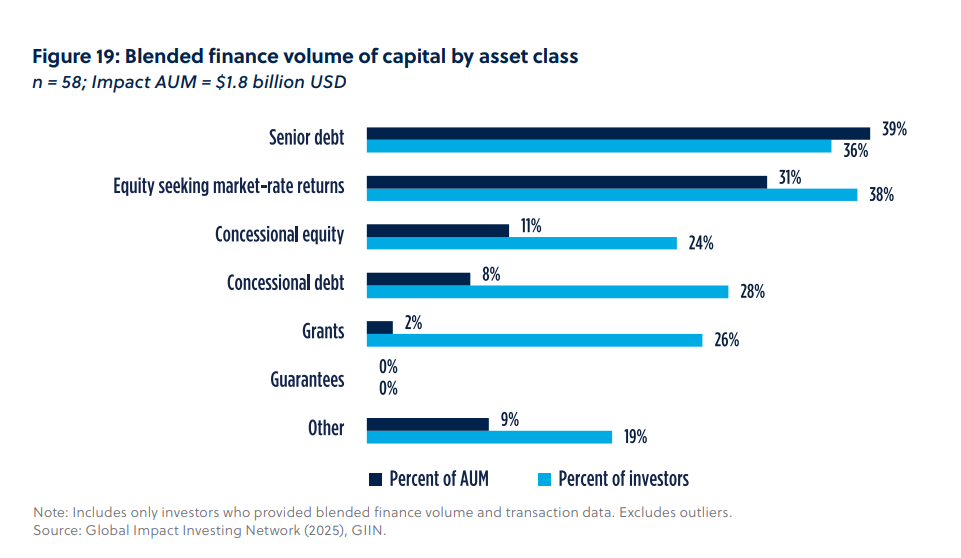
As previously referenced above, the core characteristic of blended finance approaches is that they allow two or more investors to invest alongside each other while simultaneously targeting their own objectives. One investor can pursue market rate returns, while the other can provide sub-market rate returns in exchange for social or environmental impact. Frequently these groups will be referred to as “Private Capital,” targeting market-rate or near market-rate returns, and “Public/Philanthropic Capital,” targeting concessional, or more flexible/patient, capital returns.
A unique offering of blended finance structures is their ability to expand the definition of what constitutes a feasible investment. Certain investors may deem a particular investment unsuitable based on risk-adjusted returns. Restructuring this same investment opportunity in a blended finance vehicle provides a lower-cost layer of capital, which can enable the more risk-averse investors to reassess the opportunity as a good investment. This is an example of creating a “blended pool,” so that impact-focused investors can invest alongside a more diverse group of investors.
Motivation to use blended finance
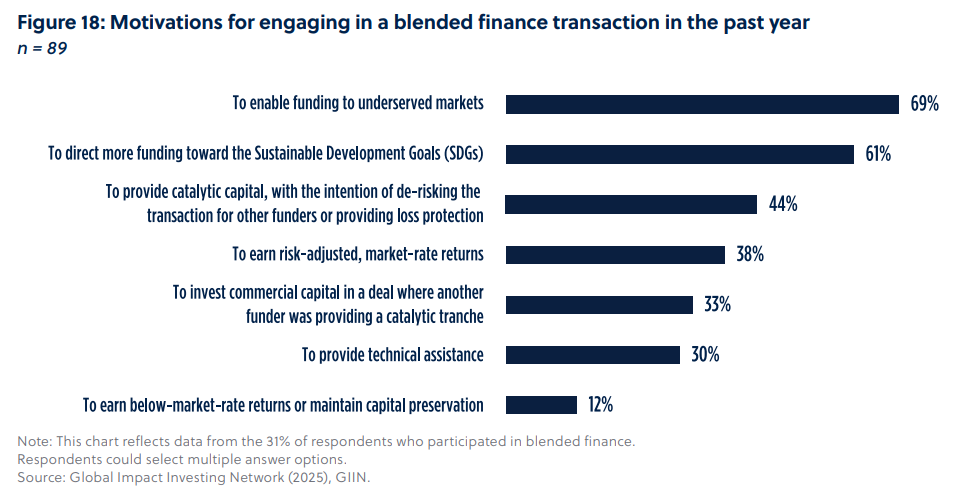
In terms of deciding if and when to use blended finance, investors’ motivations are varied and driven by a variety of factors such as risk-return preferences, impact targets and fiduciary responsibilities.
Scenarios
The scenarios below are examples of how blended finance conversations are typically triggered. Catalytic capital is used to address risks (perceived or real) facing market-rate investors and preventing them from entering into an investment. These risks could be associated with the piloting of a new business model or entrance into an unfamiliar market.
-
 Scenario 1
An investor wants to build a certain size or type of fund but does not have sufficient capital available via conventional structuring without adjusting the risk profile of the fund.
-
 Scenario 2
An investor has access to a certain amount of grant and/or public money and wants to use this funding to leverage private capital.
-
 Scenario 3
An investor’s investment structure is dependent on a combination of public and private capital, e.g., a social impact bond.
Catalytic capital for greater impact
While only a portion of the blended finance relationship, catalytic capital can play an outsized role in addressing significant challenges, such as affordable housing, supply chain sustainability, microfinance opportunities and smallholder farming. A variety of investor types are actively utilizing catalytic strategies, but due to the requirements tied to this approach, certain groups and institutions are more likely to be active in this space. Organizations like the IFC and World Bank, multilateral and development banks, Development Finance Institutions (DFIs) and institutional investors are prime examples of asset owners who are exploring catalytic innovations. Another organization helping drive the growth of catalytic capital is the John D. and Catherine T. MacArthur Foundation. Partnering with a group including other foundations, impact investors and nonprofits the John D. and Catherine T. MacArthur Foundation has launched the Catalytic Capital Consortium, C3, which, “aims to demonstrate the power of this form of investment to extend and deepen the reach of the impact investing field.”
Catalytic capital can also be used in priming early stage investments. If an investment may not yet be ready to attract risk-averse, market rate investors, catalytic capital can be used to help build the financial capacity so that overtime additional investors can be brought in. This can be especially useful in enabling investments to scale up in developing or emerging markets, where the current state of the market may limit the entry of traditional private investors. In this sense we can see catalytic capital as a tool for international development.
Investors who consciously assess financial returns alongside social and environmental impact frequently have a wider definition of an acceptable investment than those who solely measure results on financial returns. This being said, some impact opportunities may struggle to gain traction, particularly in the early stage. A variety of factors can cause this, such as high upfront costs or uncertain return potential. In such instances, the strategic use of catalytic capital can be the key to unlocking this impact. By accepting disproportionate risk and/or concessionary returns, catalytic investors can bridge the gap between grants and traditional impact investments.
Read more GIIN reports on blended finance and catalytic capital
-
State of the Market 2025: Trends, Performance and Allocations
The GIIN's State of the Market 2025 report contains the latest data from the GIIN's Annual Impact Investor Survey, including a section on blended finance transactions pursued in 2024.
-
Catalytic Capital: A key to aligning infrastructure investments with climate mitigation in emerging markets
This issue brief provides a framework for private institutional investors who aim to address climate challenges through their capital. By making use of targeted catalytic capital and other strategies, these investors can help make significant progress towards global decarbonization targets by accelerating the build out of climate infrastructure in emerging markets.
-
The State of Blended Finance
This report, first published in 2017 and updated in 2019, uses Convergence data and insights to provide an updated analysis of the blended finance market, including intended impact, blending approaches, focus sectors and target regions. The report also highlights the most active organizations in the space, provides an overview of emerging trends and themes in blended finance and reflects on progress towards ‘better blending’.